The thin man washed his dark face in a large bowl of cool water and slowly dressed in his native clothing. He wrapped himself in a long colorful Gandura and put on several bracelets. His name was Joseph Mugabo.
He found his rough, handmade, sandals made from old leather furniture and worn out tire tread soles under his bed and slipped them on. A single open light bulb that illuminated he and his wife’s small bedroom.
His well pressed police uniform and black shoes were in the narrow closet in his office at police headquarters. He would change into it when he arrived at work at 8:30, if all went well.
“How’s the coffee coming Marry?” he said in French to his wife of thirty years.
“It’s nearly ready my dear,” she answered back in perfect French.
His wife made breakfast while he dressed.
She wore a colorful mushana wrap and matching head covering. She had a plump and pleasant face and pleasant demeanor. They chatted as long married couples chat over their meager meal.
He finished quickly and placed his small bowl on the concrete counter and kissed his wife good-bye.
“Be careful my dear,” she said in French as he climbed on to his L’aviner bicycle.
It wasn’t a long ride to work but it was a steep climb up a very busy and narrow road with many dangers lurking along the way. After all of the climbing there was a steep incline down into the center of town and his office sitting in the shade of large trees. If it was raining or or he went too fast, disaster could be just around the next corner.
Joseph could see the large mountains with tilled fields out in front of him as his journey began. The red land around him was covered in green grass and small trees. Taller trees lined the fields off in the distance. This was the Rwanda that he had grown up in. Now there were many large industrial developments and new buildings springing up along the road.
Piles of trash on the side of the road and wild dogs were just a few of the dangers awaiting him on his way to work. Those and other things around him reminded him that he still lived in a third world nation. Trucks with bad breaks and poorly trained drivers were just a few of the other dangers he faced daily.
As he climbed higher he could look back down from his lofty perch on his bike and see his small, white, cinderblock house below him. He was proud of what he had accomplished in his life so far.
It was a forty minute bike ride up into the mountains and then down that steep grade surrounded by green floor of the valley with a wide river rushing through the farms at the bottom to his office, if all went well. Planted terraces clung to the steep mountain sides with small paths criss-crossing their rocky faces.
He grabbed the onto any handholds he could find on the vehicles around him. Window frames and high bumpers on cars, buses and large trucks leaving black clouds of diesel smoke behind them or even small vans that he might find to help pull him up the steeper sections of the road were a few of his choices. If he couldn’t grab a place to hang onto he would have to walk the steeper portions of the asphalt road.
The trip made him feel young again and close to “his people.” He was a majority Hutu and grew up on a farm. Life was hard there and this ride reminded him of those difficult times not so many years ago. He had done this as a child against his mother’s wishes and warnings.
If it rained, which it did nearly everyday in the rainy season, his ride could be miserable. He always carried a large black trash bag in his pocket. It was a cheap and efficient way to deal with the weather.
No one ever suspected this thin, middle aged man was the Chief of the Kigali Police Force. He felt that he was one of the lucky few, who had survived those troubled times in the recent past and had a job and bicycle.
Many others around him on this morning only had walking as a mode of transportation if no one picked them up or they had no money for a bus ticket. The roads were usually covered in throngs of men, women and children trying to get to their work or school.
There were many motorcycle taxis scurrying through traffic with several people riding where one might be seated in other countries.
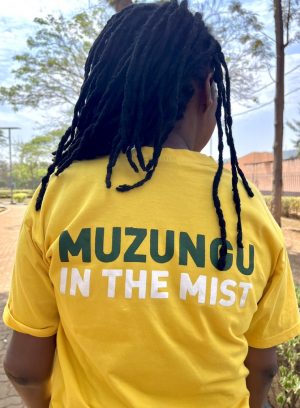
It seemed to him at times that all of humanity was walking in his country. Interestingly, many young men and women wore shirts with European or American brand names or professional sports team splashed across their backs or chests in this land so far from either.
The road was dry and dusty now that the rain had moved north for the time being. There was no reason to expect them to stay that way, however. This was a landscape of ever changing weather and politics. How long the weather and the troubles would remain “up north” was any one’s guess.
He had received his bicycle from his late father many years ago as a gift when his father decided that he was too old to ride it any longer. He was sixty-nine when he came to that difficult decision. He did keep his options open for an occasional, short, bike ride, however. He had never owned a car or had learned to drive.
His son, the new chief of police was the first member of his large and old family to have gone to college.
The ride to work was always exciting and filled with potential injury or worse. He found it stimulating and thought that it “kept him on his mental toes.”
He climbed slowly up the road now clinging to a bus going up on the road filled with sharp switch backs almost a thousand feet higher than where he started from on the mountain side high above his comfortable, little, house.
The ride gave him time to think as he climbed.
He remembered the identity cards that split the country into separate peoples who were at one time the same. The Tutsis were a mer 14 percent of the country’s population and mostly cattle herders and owners. The Hutus were 85 percent of the population and farmers. They looked the same and had the same culture.
Both groups spoke Kinyarwanda as did everyone else and had lived together peacefully until the 1920’s when the Germans and the Belgians arrived and issued identity cards. Those cards favored the Tutsi which then led to the revolution in 1959.
In 1994 the RPF defeated the government forces and militias responsible for the mass murders in the country. The extreme leaders and millions of Hutu refugees fled to Zaire, now the Democratic Republic of Congo.
This journey up the mountains was much like his life had been. Some easy parts and some very difficult parts as well. Now the country was on a new course and time would tell how that might turn out. Just like his life had had it’s ups and downs.
He had started at the bottom in the post office and after working there for a few years, he took another ivil service test. he passed the second test as easily as the first.
He then became a low level police officer with the Kigali Police Force. The work was filled with opportunities and pit falls. Some one was always in line waiting for him to make a mistake and to take his place. many took bribes as a matter of course. It was the way things were back then. He refused and often payed the price for being an honest man in a dishonest bureaucracy.
After twenty-five years, he became chief of police. Finally attaining his office was a great relief. That had been his lifelong dream and he had finally found some peace and security.
Dogs chased him and tried to bite his ankles as he thought about his life and then he let go of the bus and went too fast down hill for a moment. Often the rough road made him keep his speed down slower than he wanted. Like the progress in his country, slowly moving forward as best it could.
Then near the end of his journey, he saw the final stretch of smoother road and sped off down the long downward stretch of road to his building with two new black and white police cars parked out front.
When he reached the door, he stopped and pulled his bicycle in through the front door with him. If he didn’t, chances were good that it would be stolen. He walked in and placed it in a far corner out of the way in his office.
It was late at ight in New York City. Todd dialed the international number for the Kigali Police Department. he sat drumming his fingers as the phon rang. he wasn’t known for his patience at homer or at work. It rang twice, to his surprise.
“This is Shyaka Smith, how may I help you?” “This is Todd Jacobs in New York with the FBI.”
_________________________________________________________________________________________________________
I want to thank all of you for coming to read my nonsense.
This story is based on my recent trip to Rwanda, Kenya and Tanzania.
More to come.
I’m at cowboyproductions52@gmail.com if you care to leave a comment.